


Regarding the retirement of Dr. Fariba Karamet, Dr. Fatemeh Torkamanasadi was appointed as Famenin Brucellosis Cohort Study supervisor.

In accordance with the research projects related to the Famenin brucellosis cohort in a research entitled: Investigation of the prevalence of brucellosis in domestic animals (cows, sheep, and goats) of Famenine City in 2018 and according to the approval of the scientific results of this project by the veterinary organization of Hamadan, after examining 1758 animals in Feminine city, 23 animals, including 2 goats and 21 sheep, were diagnosed positive for brucellosis and were removed from the breeding cycle under the supervision of the veterinary organization and with the consent of the livestock owners.
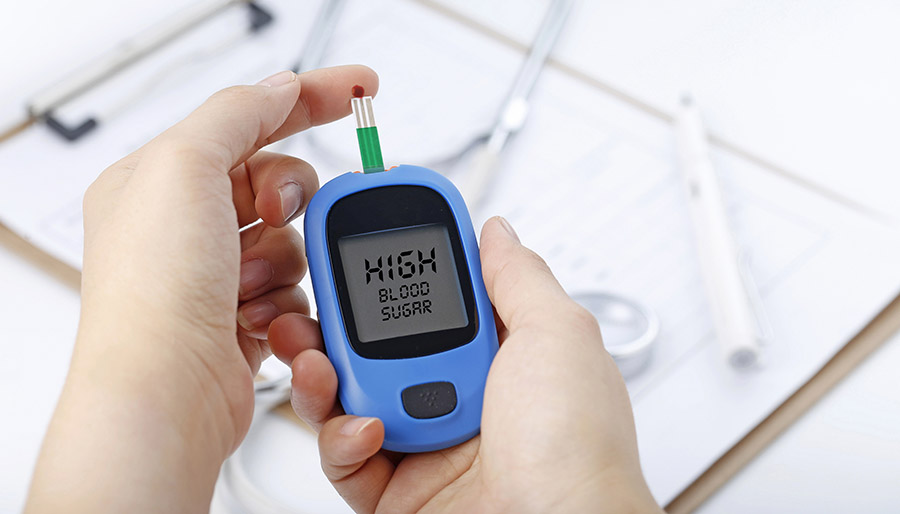
Hand holding a blood glucose meter measuring blood sugar, the background is a stethoscope and chart file
People who consume higher levels of dietary L-arginine, an amino acid involved in the metabolism of glutamate and proline, were found to have an increased risk of developing type 2 diabetes (TD2), according to research results published in BMC Endocrine Disorders. In the context of total protein intake as well as L-arginine-to-protein ratio, however, no association was found between increased L-arginine intake and risk of T2D.
Research has suggested that L-arginine may be involved in nitric oxide-dependent pathways that affect the homeostasis of glucose and insulin. Currently, little data from long-term studies elucidate the effects of L-arginine intake on the risk for T2D.
In a recent prospective cohort study, a team of researchers from Iran examined the potential impact of dietary L-arginine intake on T2D incidence in 2139 adults (mean age, 38.9 years; 54.6% women) who participated in the third phase of the Tehran Lipid and Glucose Study (TLGS) and who did not have T2D at baseline.
The researchers assessed typical daily intake of protein and L-arginine using a 168-item validated food frequency questionnaire. Participants were considered to have developed T2D over the follow-up period if they were using an antidiabetic drug, had a fasting serum glucose of at least 126 mg/dL, and/or had a 2-hour post-challenge glucose level of at least 200 mg/dL.
Over the median 5.8-year follow-up period, the mean daily intake of dietary protein was 77.2±22.4 g, and the mean daily intake of L-arginine was 4.05±1.50 g. Participants with and without diabetes had the same mean daily intake of L-arginine during the study (4.05±1.5 g for each).
In the crude model, the researchers found no significant association between L-arginine intake and T2D risk in the second tertile (hazard ratio [HR], 0.83; 95% CI, 0.55-1.26) or the third tertile (HR, 1.06; 95% CI, 0.71-1.56) of L-arginine intake (P =.43).
Another analysis was conducted and adjusted for diabetes risk score; physical activity; sex; age; smoking; total energy intake; and intake of carbohydrates, fiber, fats, lysine, and total protein. In this adjusted model, there was a significantly increased risk of T2D in the highest L-arginine intake tertile (mean, >5.4 g/d) compared with the lowest tertile (mean, 2.69 g/d; HR, 2.71; 95% CI, 1.20-6.09; P =.02).
In contrast, there was no association between total protein and ratio of L-arginine-to-total protein intake and T2D incidence (HR, 1.89; 95% CI, 0.99-3.60; P =.052).
A limitation of this study was the lack of adjustment for other factors in food sources of L-arginine that could have affected T2D risk. The lack of data about serum L-arginine levels represented another study limitation.
The researchers noted that given the increased interest in ingesting L-arginine as a “dietary supplement, and also the limited data in case of the potential association between dietary L-arginine and cardio-metabolic outcomes especially T2DM, further cohort studies are required to clarify the possible association.”
Reference
Mirmiran P, Bahadoran Z, Gaeini Z, Azizi F. Habitual intake of dietary L-arginine in relation to risk of type 2 diabetes: a prospective study. BMC Endocr Disord. 2021;21(1):113. doi:10.1186/s12902-021-00774-x
 Webinar: Shahrekord Prospective Epidemiological Research Studies in Iran (PERSIAN) experienceJune 3, 2024 - 4:22 pm
 Association between latent profile of dietary intake and cardiovascular diseases (CVDs): Results from Fasa Adults Cohort Study (FACS)October 18, 2023 - 11:43 amAssociation between adherence to the Mediterranean diet with cardiometabolic risk factors: a cross-sectional study on PERSIAN cohort study in FasaSeptember 8, 2023 - 8:09 am